
A bitter surprise.
One of our most enjoyable rediscoveries whilst travelling through Italy was amaro.
Dark, bitter, and intriguing, it revealed an almost endless range of flavour profiles. We found ourselves actively seeking it out — not simply as a drink, but as a reflection of time and place.
Each amaro told a quiet story: of local botanicals, regional traditions, and the landscapes they came from.
At first, our interest was cautious. The reputation of amaro with its bitter, and medicinal focus was not immediately inviting. But with time, and with greater attention, that initial bitterness began to open up. Beneath it were layers of citrus, spice, floral notes, resin, and warmth, each bottle offering a different balance and expression.
What started as skepticism became curiosity, and then appreciation. The more we explored, the clearer it became that amaro is not a single flavour, but a broad and nuanced category — one that rewards patience, context, and repeat tasting.
What Is Amaro?
At its core, amaro is a bitter-sweet liqueur made by extracting flavour from botanicals in alcohol. Roots, barks, herbs, flowers, citrus peel, and spices are macerated or infused, then sweetened and diluted to a final balance.
Despite the shared name, amaros vary wildly in character. Some are light and citrus-forward, designed to stimulate the appetite. Others are dark, resinous, and deeply bitter, intended as a digestif. What unites them is structure: bitterness supported by sweetness, aroma, and alcohol.
Amaro is a reflection of Italy’s regional landscapes as much as its culinary culture.
A Brief History
Amaro’s roots lie in medicinal tinctures and monastery traditions. Long before it became a commercial product, bitter herbal preparations were used for digestion, preservation, and general wellbeing.
In the 19th century, these formulas began to move from apothecaries into cafés and households. Families and producers refined their own blends, often using local plants and regional ingredients. Over time, these recipes became the foundations of the amaros we know today.
While many classic formulas remain closely guarded, the underlying principles have stayed consistent: careful extraction, balance, and restraint.
The Building Blocks of Amaro
Bittering Agents
These form the backbone of any amaro. Common examples include gentian root, quinine-containing barks, wormwood, and various alpine roots. Bitterness provides structure and length, preventing sweetness from becoming cloying.
Aromatic Herbs and Flowers
Herbs such as chamomile, thyme, rosemary, mint, and sage contribute lift and complexity. Flowers add softness and perfume, helping round sharper elements.
Citrus Peel
Citrus brings brightness and definition. Bitter orange, sweet orange, lemon, grapefruit, and mandarin are all used, often in combination. The balance between bitter pith and aromatic oils is critical.
Spices
Warm spices — clove, cardamom, cinnamon, coriander — are used sparingly. Their role is to support, not dominate.
Sweetening
Sugar, honey, grape must, or caramelised sugar are used to balance bitterness. The goal is integration rather than obvious sweetness.
Styles of Amaro
Rather than strict categories, amaro styles exist on a spectrum. What follows is a practical way to think about them, with a few well-known examples for reference.
Aperitivo-Style
Lighter in body and bitterness, often citrus-driven and gently herbal. Designed to stimulate the appetite rather than linger heavily on the palate.
Examples: Campari, Aperol, Select, Cappelletti Amaro Sfumato (lighter serves).
Alpine / Herbal
Focused on roots, barks, and mountain herbs. These amaros tend to be drier, more aromatic, and assertively bitter, often reflecting alpine or forested regions.
Examples: Braulio, Zirbenz, Amaro Alpino, Amaro del Capo (herbal expressions).
Dark and Resinous
Richer, deeper styles built around bitter roots, barks, and caramelised sugars. These are typically sipped slowly and often served as digestifs.
Examples: Fernet-Branca, Amaro Nonino Quintessentia, Montenegro, Ramazzotti.
Modern and Contemporary
Newer producers working within the traditional framework but using local botanicals, foraged ingredients, or unconventional balances. These styles vary widely but often emphasise place and season.
Examples: local craft amaros, small-batch regional producers, contemporary distillery releases.
How Amaro Is Made
Most amaros begin with neutral alcohol, which acts as a solvent for flavour. Botanicals are macerated or infused separately or together, depending on their intensity and solubility.
After extraction, the components are blended, sweetened, diluted, and rested. Resting allows flavours to integrate and soften. Some amaros are aged in wood, though many are bottled without barrel influence.
Clarity varies by style. Some producers filter aggressively for brilliance; others accept a natural haze as part of the product’s character.
Making Amaro at Home
Making amaro at home is more straightforward than you think.
Before you start, decide what you want the amaro to be. Is bitterness the backbone, or just a gentle edge? Are you aiming for bright citrus and lift, or something darker and more resinous? How much sweetness will support the profile without flattening it?
With my love of Campari I decided to play around with making my own version at home click here to find the recipe.
Where to source your ingredients
Most common ingredients can be sourced from you local market or supermarket.
For more specialized herbal ingredients we like to use:
Things to remember
Work in stages. Extract the most intense botanicals separately so you can control them, then blend gradually and taste as you go. Give it time between adjustments — not just during extraction, but after sweetening and dilution as well. Amaro changes as it rests, and patience is often the difference between something sharp and something integrated.
In closing
Amaro rewards curiosity. It isn’t a drink that demands expertise, only attention — and a willingness to taste more than once. Enjoyed neat after a meal, stretched with soda on a warm afternoon, or worked quietly into a cocktail, it has a place at the table in many different moments.
Making it at home follows the same logic. It doesn’t require perfection or specialised equipment, just an understanding of balance and the patience to let things settle.
Once those foundations are in place, amaro becomes less mysterious and far more personal — a way to capture flavour, place, and intent in a bottle.
- Will and Milena
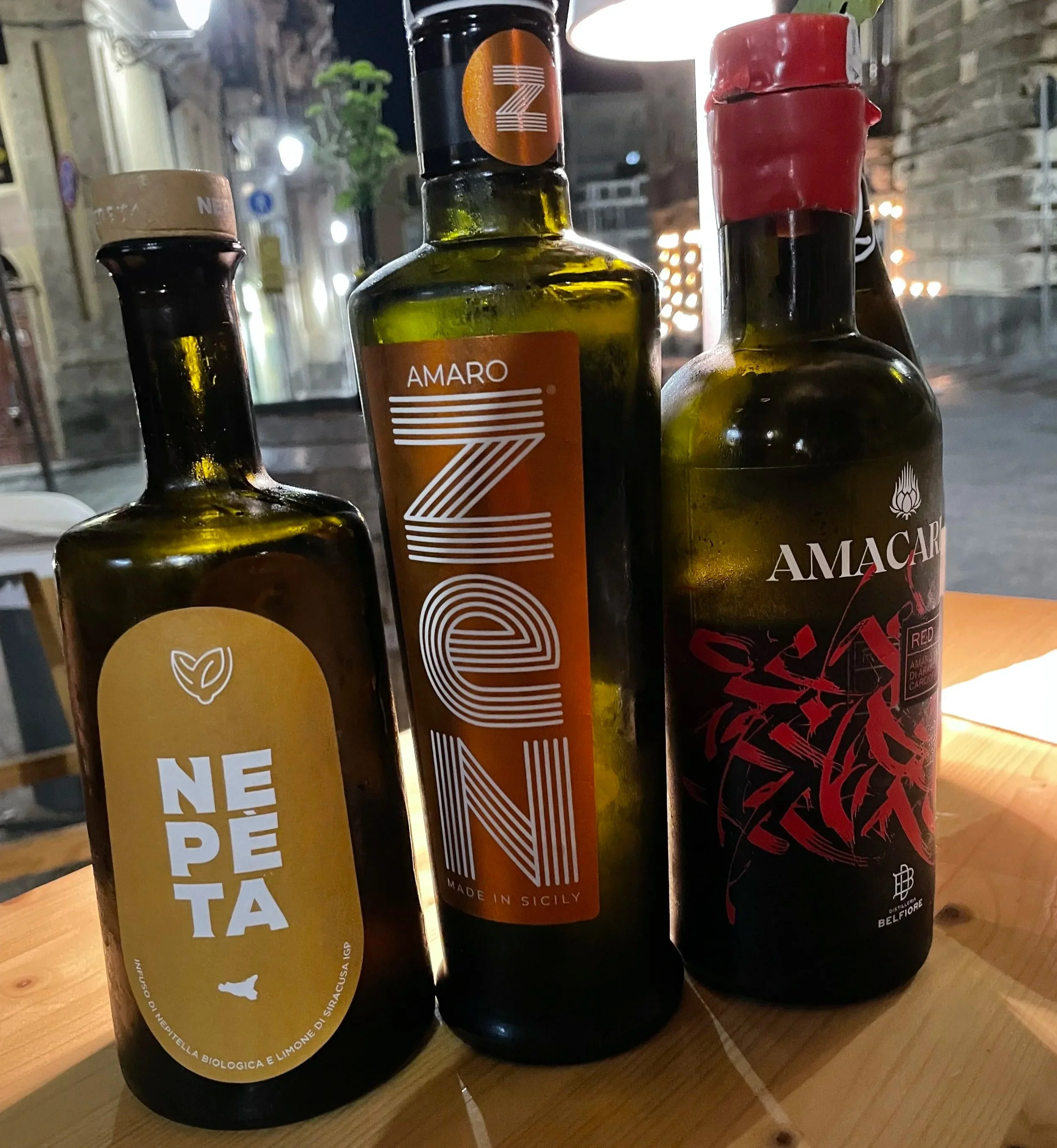
Local amaro from Sicily.